UX Strategy & Systems
• Learning Pool •
Creating scalable documentation systems, processes, and team frameworks in a EdTech organisation
Learning Pool is a global learning technology company serving enterprise clients worldwide. As the UX function scaled, we faced critical challenges around knowledge management, process standardisation, and cross-functional collaboration.
The Challenge
UX work was siloed and invisible to stakeholders. No central documentation meant repeated questions, lost context, and difficulty onboarding new team members.
Product stakeholders and engineers struggled to understand design decisions. New designers took weeks to get up to speed. UX contributions weren't visible at an organisational level.
Create scalable infrastructure—documentation systems, processes, and frameworks—that would grow with the team whilst making UX work transparent, reusable, and strategically aligned with business objectives.
My Approach: Building Systems, Not Just Features
Rather than focusing solely on individual feature designs, I recognised that Learning Pool needed infrastructure that would scale. I took ownership of building documentation systems, redesigning team processes, and creating frameworks for strategic alignment.
The Process
Discovery & Audit
Conducted a comprehensive audit of existing Confluence spaces, identifying gaps, redundancies, and pain points. Interviewed stakeholders across Product, Engineering, and Customer Success to understand their information needs.
The Problem: Engineers and PMs were hunting through Slack DMs and Figma files to find design rationale. Senior leaders had no visibility into what the UX team was working on or why it mattered.
The Root Cause: No single source of truth. Design decisions lived in designers' heads or scattered across tools without clear documentation.
Stakeholder Workshops
Facilitated collaborative Miro workshops with the Head of UX, Principal Product Designer, and UX leads to co-create the ideal information architecture. Used sticky notes and affinity mapping to prioritise what to keep, merge, or remove.
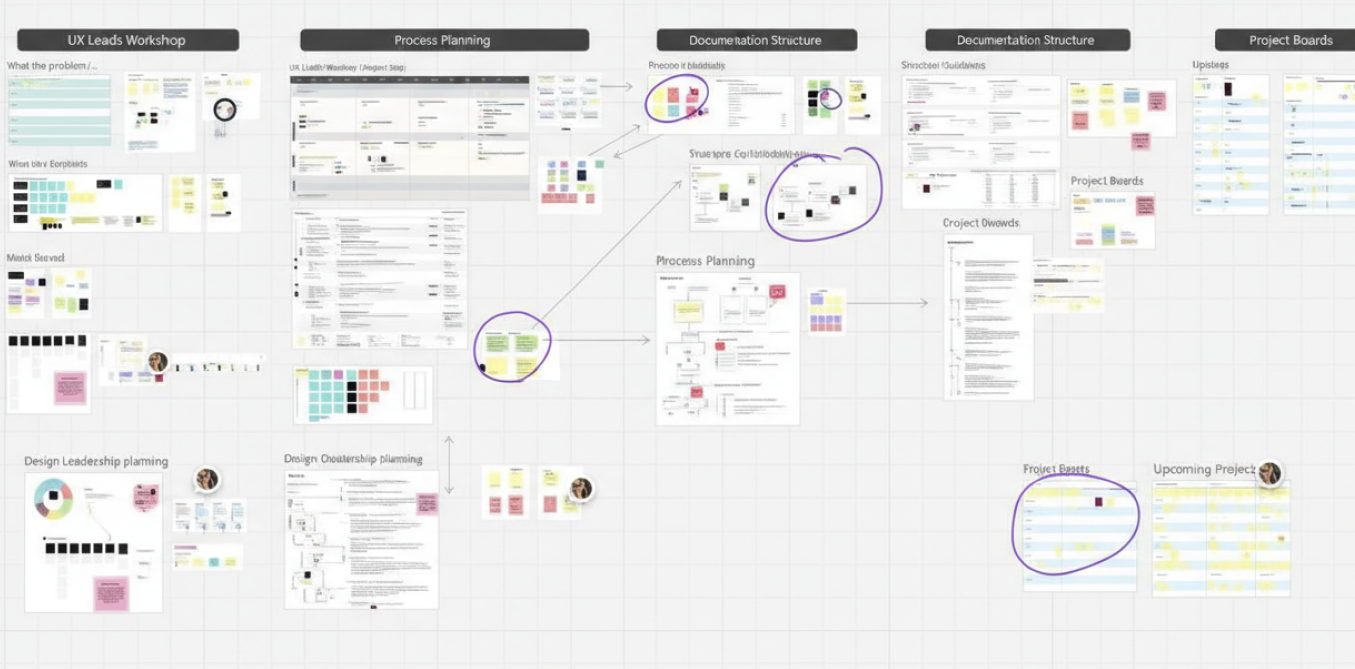
Collaborative workshops where we mapped out documentation structure and identified process improvements
Framework Design
Created a hierarchical documentation structure that balanced comprehensiveness with scannability. Defined clear templates for different types of UX deliverables.
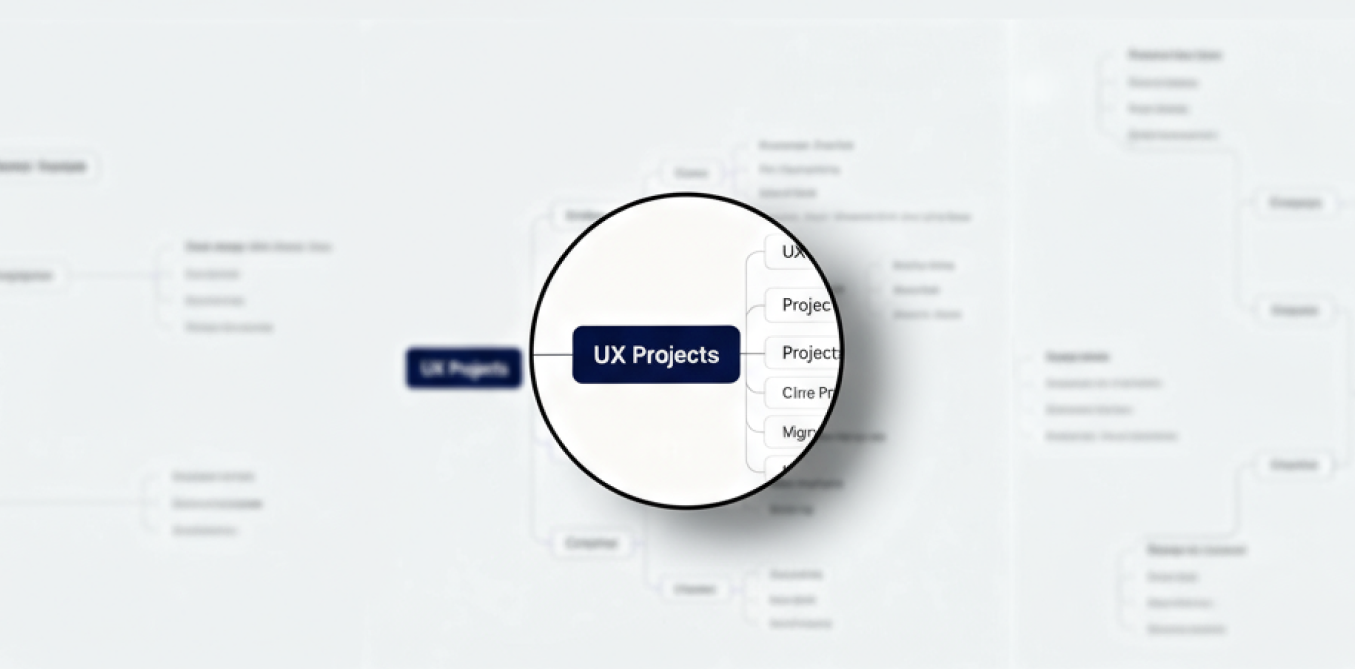
The documentation system architecture: structured, scalable, and designed for discoverability
What Makes It Work
- Context-First: Every project includes business goals, user needs, design rationale, and outcomes
- Template-Driven: Reusable templates ensure consistency whilst reducing friction
- Multi-Audience: Structured to serve PMs, engineers, and leadership differently
Implementation & Iteration
Rolled out the new structure incrementally, migrating content and training team members. Gathered feedback and refined templates based on actual usage patterns.
Process Innovation That Saved 20+ Hours Weekly
Beyond documentation, I redesigned team workflows in collaboration with the Head of UX. These changes eliminated meeting fatigue whilst maintaining team connection.
Weekly Team Meetings: 8 designers × 1 hour weekly = 8 hours of synchronous time, plus context switching and calendar fragmentation. Team members felt meeting-fatigued.
Async Slack Stand-ups: Designers share updates asynchronously. Creates a searchable audit trail. Saves 2-3 hours per designer weekly = 20+ hours across the team.
Strategic Roadmap Development
Introduced UX and Product Design roadmaps that aligned user needs with business strategy, providing clarity on quarterly priorities.
Design Lean Coffee Sessions
Introduced optional Thursday "Lean Coffee" sessions where designers could discuss challenges, review work, or simply connect.
Impact and Outcomes
For the Team
Created a culture of transparency. UX work is now visible, searchable, and referenceable. New designers can quickly understand "how we work here."
For the Business
Process improvements eliminated redundant meetings. PMs can self-serve design context. Leadership gained strategic visibility into UX contributions.
For Users
Better designs through institutional knowledge. Lessons learnt were preserved and applied to future work, improving quality over time.
Reflection
This work taught me that effective design leadership isn't just about shipping features—it's about building the infrastructure that enables great work at scale.
Lead Without Authority
When documentation and process needs emerged, I took ownership of building the infrastructure. No one assigned me this work. I saw the problem, proposed a solution, and collaborated with leadership to implement it.
Systems Over Solutions
Individual features are important, but creating scalable infrastructure has exponential impact. Documentation frameworks and process improvements benefit the team long after project completion.
Collaboration at Scale
The most effective solutions emerged from co-creation workshops with the Head of UX, Principal Product Designer, and department leads. Building something with people, not for them, creates buy-in and ensures sustainable adoption.